
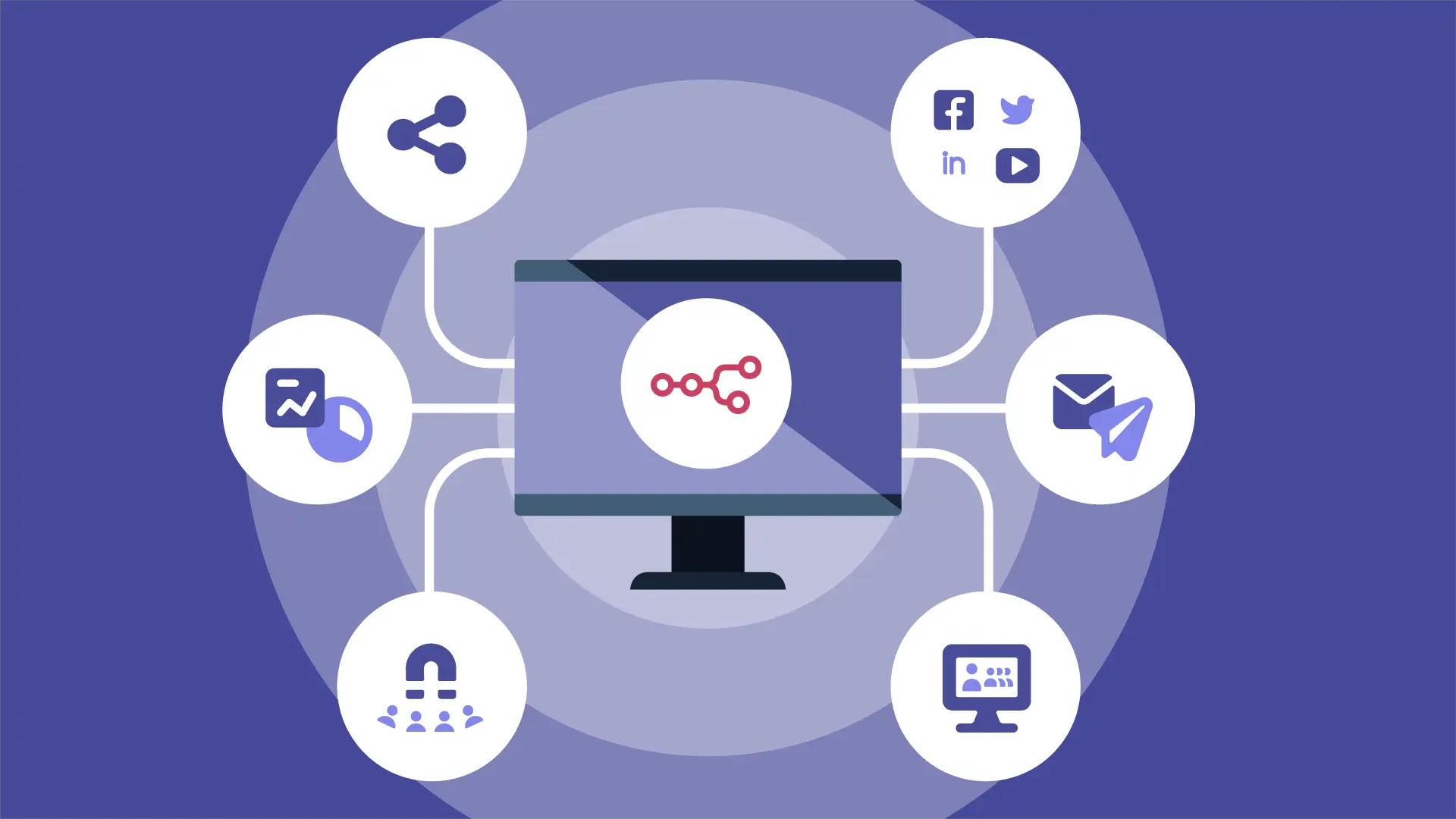
Automation removes the need for human interaction for work that requires tasks in successive steps. It directs the steps in a workflow, does the in-between tasks work, and guides the process through to completion. This eliminates repetitive processes, improves efficiency, and reduces errors.
In real estate, this typically involves two or more systems that work well separately, but can’t communicate with each other directly. The output of one system has to be given to another system as input, forming a chain of independent systems. Often, the between-systems decisions are easy enough for trusted delegation. Unfortunately, it might sit for a while, wasting valuable time, waiting until somebody can get to it.
How does automation software work?
- Integrates disparate processes into a single workflow.
- Translates data between processes.
- Uses hard-coded if-else decision logic for simple workflows.
- Uses Predictive Modeling for complex decision-making workflows.
- Keeps log records and alerts if problems arise.
Types of Automation Software:
- Marketing Automation – Handles tasks like email campaigns, lead nurturing, and social media scheduling.
- Business Process Automation – Automates workflows like approvals, invoicing, and document management.
- Robotic Process Automation – Uses software “bots” to perform routine tasks like data entry, form processing, and listing management.
- Information Technology Automation – Manages tasks such as server provisioning, backups, and network monitoring.
Benefits:
- Increases efficiency and productivity by reducing manual effort and removing downtime.
- Improves accuracy and consistency by reducing human errors in repetitive tasks.
- Saves costs by freeing up resources, allowing employees to focus on more strategic tasks.
- Extremely scalable.